 |
| (image credit) |
Showing posts with label Strengthen your body. Show all posts
Showing posts with label Strengthen your body. Show all posts
Monday, June 6, 2016

Monday, July 6, 2015
Chen Shiyu: Wudang Liang Yi Quan
The rhythm and expressions are more about fajing for Master Chen Shiyu, as he performs Wudang Liang Yi Quan.
Monday, June 22, 2015
Chen Shiyu (1) Wudang T'ai Chi 28
Master Chen Shiyu performs Wudang T'ai Chi 28 in the space between plant sprawl and brick ruins.
Monday, June 8, 2015
Chen Shiyu: Wudang Xuan Wu Quan
In the long shadows of late afternoon, Master Chen Shiyu performs Wudang Xuan Wu Quan - Liang Yi Quan.
Monday, May 25, 2015
Chen Shiyu (1) Wudang T'ai Chi Sword
Soft and relaxed, centered and rooted is Master Chen Shiyu, as he performs Wudang T'ai Chi Sword.
Monday, May 11, 2015
Chen Shiyu: Wudang Qi Gong (Crane Form)
Master Chen Shiyu performs a deeply meditative and graceful Wudang Qigong (Crane Form).
Friday, March 20, 2015
How T'ai Chi is Healthy (3) Lifting
 |
| (image credit) |
Wednesday, March 18, 2015
How T'ai Chi is Healthy (2) Stretching
 |
| (image credit) |
Monday, March 16, 2015
How T'ai Chi is Healthy (1) Balancing
 |
| (image credit) |
Friday, December 26, 2014
Peng Energy as Swiss Ball in Pool
Sifu Ken Gullette gives an explanation of Peng Energy, one of the most important skills in the internal arts of T'ai Chi, Hsing-I and Bagua. Combined with the ground path, it is essential to maintain Peng at all times and throughout every movement. Sometimes, Peng Jin is called "Ward Off," but that is too simple.I like the Swiss Ball in the pool analogy, as our body has to have an unshakable resilience or bounciness in self defense. You root yourself, but your root is alive and agile, not stationary or stiff, and the Peng energy you release comes from your root and is directed from the waist.
Wednesday, December 24, 2014
The Song of Peng (3)
 |
| (image credit) |
The entire body is filled with springlike energy,Reference: Songs of the Eight Postures, by T'an Meng-hsien.
opening and closing in a very quick moment.
Thursday, November 27, 2014
T'ai Chi is a Martial Art
 |
| (image credit) |
Tuesday, November 25, 2014
T'ai Chi is Swimming in Air
 |
| (image credit) |
Monday, October 13, 2014
Hollowing Chest, Rounding Back
This principle is about opening up your upper body, so the chi can circulate more freely throughout your body. Consequently, you can move with greater speed and strength.
Friday, October 3, 2014
Suspending Body from the Crown
'Suspending the Body from the Crown of the Head'... connects the whole body to the heavens.I'm not sure that Taiji Zen meant this to be Lesson 2, but I think it makes more sense as Lesson 1. Whether in a standing posture or continuous movement, this is so fundamental to T'ai Chi. It is important to raise our head as if a string were attached at the crown and suspended our head from directly above. Besides aligning our body, it also opens our mind (i) and raises our spirit (shen).
Monday, August 18, 2014
When I lose my balance
 |
| (image credit) |
I may be stepping or kicking, sweeping my leg across, or simply raising it. If I should lose my balance, I don't get tense trying to maintain it. That seems to be our tendency: That is, we fight to avoid falling out of movement, and that is not abiding by T'ai Chi principles.
When I do my daily T'ai Chi, I'm not performing for anybody, I'm not demonstrating anything, I'm not in competition at a tournament. Rather I am simply practicing.
I work at re-centering myself, in a relaxed, natural manner. Sometimes that's all I need to keep my balance, and I go forward with the movements. But sometimes I just set my foot down, pause a moment or two, and continue on.
Friday, May 30, 2014
Relaxation in T'ai Chi, by Sifu Wong Kiew Kit
 |
| (image credit) |
There are three golden steps to relaxation. First, have your body symmetrical. For example, if you are standing, check that you are standing upright, with your shoulders level and your arms hanging loosely at your sides. Then loosen all your muscles. Don't worry how or why you do it; just do it. Second, have your lips gently open and smile from your heart. Again, just do it. Third, close your eyes gently and do not think of anything. Then just let go. All these are easier done than described, and need not worry about the principles behind them. Just do them and enjoy the benefits.From On Shoong, by Sifu Wong Kiew Kit.
*
Michael Garofalo culled information, quotes and references on relaxation - Relaxed - and I am grateful for his effort. Over several days in July 2011, I meditated over each one of these quotes and made notes in my T'ai Chi journal:
Not just to be really, really, but truly to be completely and absolutely shoong. I would like to imagine that in the future, I can be completely impervious to some people's craziness and shenanigans, by being absolutely shoong.
Going forward I will post regularly on relaxation, with more quotes and notes.
Monday, May 26, 2014
Relaxation in T'ai Chi, by Lao Tzu
 |
| (image credit) |
A man is born gentle and weak.
At his death he is hard and stiff.
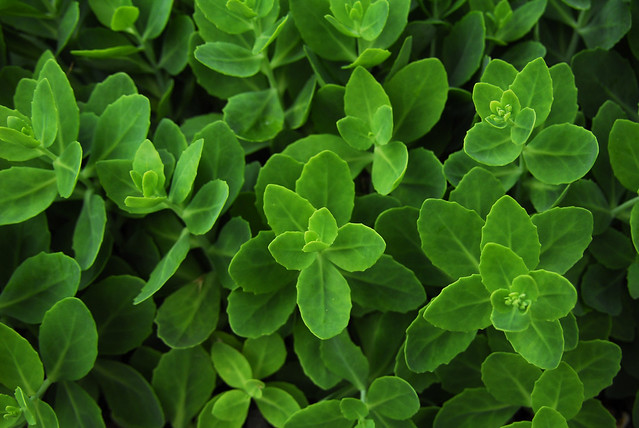
Green plants are tender and filled with sap.
At their death they are withered and dry.
Therefore the stiff and unbending is the disciple of death.
The gentle and yielding is the disciple of life.
Thus an army without flexibility never wins a battle.
A tree that is unbending is easily broken.
The hard and strong will fall.Chapter 76, from Tao Te Ching, by Lao Tzu.
The soft and weak will overcome.
*
Michael Garofalo culled information, quotes and references on relaxation - Relaxed - and I am grateful for his effort. Over several days in July 2011, I meditated over each one of these quotes and made notes in my T'ai Chi journal:
Not just to be really, really, but truly to be completely and absolutely shoong. I would like to imagine that in the future, I can be completely impervious to some people's craziness and shenanigans, by being absolutely shoong.
Going forward I will post regularly on relaxation, with more quotes and notes.
Monday, April 14, 2014

Friday, April 4, 2014
Carol McPhee Elaborates on Chi Cleansing
To clear out energy blockages, P.M. T'ai Chi with expert CJ McPhee helps you realign the flow of chi through a series of forms. Starting with opening the major energy gateway to allow chi to circulate. Then aligning the spine to encourage free flow of energy to revitalize your body. Ending with cleansing the body of stagnant chi and restoring it with pure chi .More than 30 years ago, my T'ai Chi instructor and classmates and I traveled from Chicago to Snowmass, CO for two weeks of T'ai Chi training that would last us a lifetime.
In one session, Marshall Ho'o taught an exercise for gathering up negative chi within us, releasing it and letting the Universal work its positive force, then taking in that fresh energy back within us.
Carol McPhee does a wonderful elaboration of this simple exercise.
Subscribe to:
Posts (Atom)