 |
| (image credit) |
Monday, September 9, 2013


T'ai Chi Mind, Empty Mind
 |
| (image credit) |
To wit, Blaise Pascal:
Man finds nothing so intolerable as to be in a state of complete rest, without passions, without occupation, without diversion, without effort. Then he feels his nullity, loneliness, inadequacy, dependence, helplessness, emptiness.
It will take time, then, for those who dread an empty mind to feel comfortable with, and adopt, Chi meditation and practice. Nastasha Dern offers some guidance and promise in Why do we Fear an Empty Mind? (emphasis, added):
When you believe this mind, you seek this "I" outside yourself. All one has to do is to remain quiet, calm the mind and experience this space between the thoughts. In this state, only the "I" exists. When you let this "I" in your mind be, without resisting, you enter the realm of emptiness -- pure consciousness or the creative void. Whatever comes up, do not take it personally. Just observe. Allowing your mind to "go blank" for a little while won't kill you, and will actually help you discover your potential, unlimited.
When self is absent and thoughts negated, we are open to the unknown. Not only does the mind become utterly blank, but it loses the all encompassing idea of a personal ego. We are oblivious to all lower sensations and are instead awake to the rich, conscious and sublime nothingness. Since the capacity to remain in this state for more than a few minutes can impose a strain, the intellect or imagination rush in with ideas or images, thus ending the tension. With time and practice we can endure the weight of this indescribable and incomprehensible experience.
Friday, September 6, 2013
T'ai Chi Empower - The Energy Sequence
Studying and Practicing Make Perfect
 |
| (image credit) |
As you see, simply by glancing at the Empower Sections on the right hand column, there are many aspects to T'ai Chi. So be curious, learn what you can about its philosophy and practice. You can do so with little or no cost, too.
- Head over to your nearest library, and relax over a handful of books.
- Browse sections in the bookstore, and read a page or two about T'ai Chi.
- Look for a class at your park district, local schools, or community center.
- Search for videos of interest on YouTube or TED.
- Google T'ai Chi, and look over the links on the first page.
- Join relevant groups on Facebook and Google+, and post, comment and discuss.
- Follow those on Twitter who mirror your interests, and scope through their tweets.
- Make new T'ai Chi friends, practice together, and talk over tea.
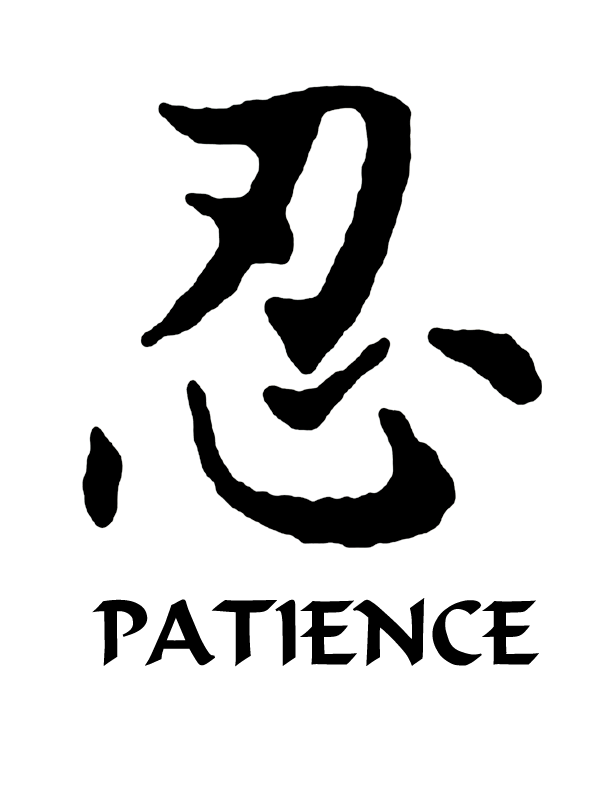
Health Requires Patience and Discipline
 |
| (image credit) |
Many people have heard great things about tai chi. They expect wondrous benefits from showing up for class. They are accustomed to the ideas of Western medicine where a doctor gives you a pill and you are better in a few days or weeks at most. When the benefits of tai chi don't miraculously appear after their first class or two, they want to give up.Reference: Truths About T'ai Chi for Health.
@eborreson Well-said, Eric. I learned early on that T'ai Chi teaches patience. Health, like any skill, takes time to develop.
— TaiChiEmpower (@TaiChiEmpower) September 6, 2013
Among the meta-lessons I learned from T'ai Chi classes early on was patience. We practiced one new movement a week, and showed we had learned it, before going on to the next one. It was the unspoken lesson about how we learn T'ai Chi.
So it is with health. It is not a matter of popping a pill and feeling some instant relief. Rather, it is a matter of pinpointing the cause of the malady, and making lifestyle or behavioral changes for the better over the long run.
Thursday, September 5, 2013
T'ai Chi Awareness Helps with Health
 |
| (image credit) |
I injured my back three times 20 - 25 years ago.
One time was actually during T'ai Chi practice. It was the 2nd Part of the Yang Long Form, and the movement was Old Man Finds Needle at the Bottom of the Sea (that's a mouthful). I bent forward at the waist, and apparently I bent too far for whatever looseness my body felt at the time.
I was practicing T'ai Chi regularly, but I was also under the stress of graduate school. I was quite flexible and strong, as it were, so hurting my back was a surprise. But what I learned after self-reflection was that the stress reduced the awareness I had for my body. It was relatively early in the morning, when my body was naturally still a bit stiff from sleeping and I was preparing to head to campus downtown.
That was a pivotal lesson learned for me. There are other bending and twisting movements in T'ai Chi, but with better awareness of my body, especially under stress, and with more patience in doing such movements, I have never again hurt myself from T'ai Chi.
The second and third times I injured my back came from the same activity: doing seated leg presses on the weight machine. I have very strong legs, and I had upped the poundage very high. But even as I braced myself well against the seat back, and used proper form in the exercise, I hurt myself.
You see, this was my lesson learned, well after the injuries. In fact, I was baffled as to how I hurt myself. I was not doing anything strenuous or even bending at all. I may not have been doing anything physical, really. The pain came on suddenly, but well delayed following the seated leg presses. For about two weeks it was tough sitting and standing and also getting in and out of bed. Thankfully it didn't impede my graduate studies in the least, and I recovered soon enough.
It was a handful of months later, I hurt my back again. The same injury, the same circumstance: That is, I wasn't doing anything strenuous, when the pain shot through my back.
I simply kept aware of my activities, including weight training, when I recovered from it. What I remember was, As I positioned myself on the seated leg press, I could feel the pressure of the padded back on my lower back. It was exactly where I injured myself. Then, I figured out that I was way overloading the weights for this exercise.
The body is a well-connected thing, as athletes know. Doing this exercise clearly wasn't just for the legs. My back had quite a play into my lifting very heavy weights. My back was strong, but it simply wasn't up to that heavy-duty lifting that my legs were.
Mentally, too, I obviously had the discipline and toughness to push my body forward. But I needed to be smart about it, as a back injury isn't anything to take lightly. Rather, I needed to be more aware of how my body was doing.
I am thankful to God that I have had no back, or any other, injury since.
T'ai Chi has kept me healthy via its discipline around awareness
Subscribe to:
Posts (Atom)